Saving the world – the flood.
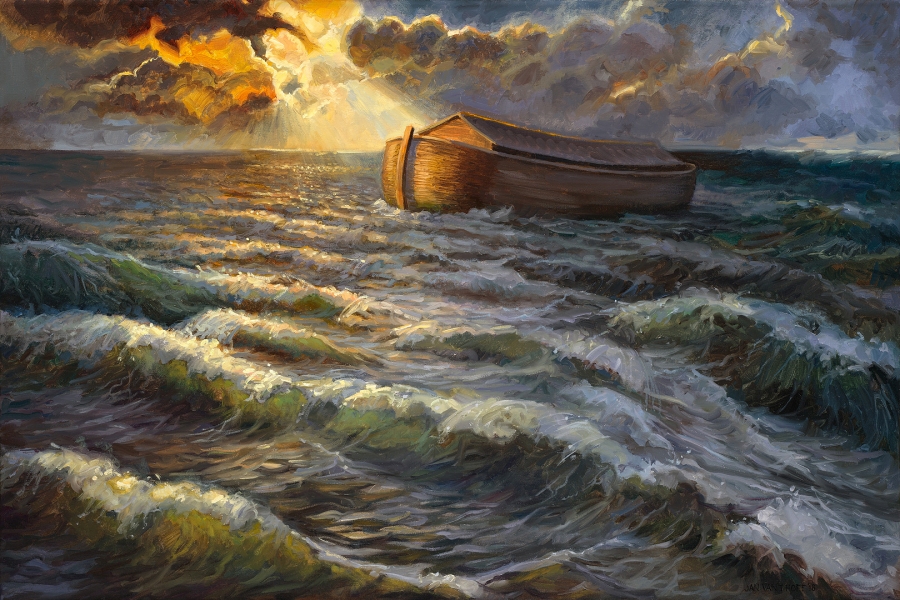
When we think about the flood story, we usually think about an angry God having a divine dummy-spit and destroying everything he had made – except for a few people and livestock. But is that really how the Bible tells the story? To get a better understanding, let’s first take note of a very odd turn that occurs between chapters 5 and 6 of Genesis. If we start at the end of chapter 5 after the family tree details, we find a bloke called Lamech looking for comfort: “When Lamech had lived 182 years, he had a son. He named him Noah, saying, “This one will bring us comfort from our labour and from the painful toil of our hands because of the ground that the LORD has cursed.” But by the end of this passage, God is getting ready to destroy the whole world. “I will wipe mankind, whom I have created, from the face of the earth–men and animals, and creatures that move along the ground, and birds of the air–for I am grieved that I have made them.” Some comfort, indeed. First let’s note that there’s a little play on words in the Hebrew text here. When […]


Living in the tents of Shem.

Noah’s words to his sons In Parshah Noach, (Gen 9:24ff), we read the words of Noah to his three sons, Shem, Ham and Japheth, after Ham has ridiculed his father for lying drunk and naked in his tent. When he wakes and discovers what has happened, Noah says: “Cursed be Canaan; a servant of servants shall he be to his brothers.” He also said, “Blessed be the Lord, the God of Shem; and let Canaan be his servant. May God enlarge Japheth, and let him dwell in the tents of Shem, and let Canaan be his servant.” Now this passage raises more questions than you could poke a stick at, but I really only want to deal with a couple of them now. The main question I want to focus on arises from Noah’s words to his third son. “May God enlarge Japheth, and let him dwell in the tents of Shem”. So what question does this statement create? In the ESV translation quoted, it is quite obvious – Japheth will live in the tents of Shem. But in the Hebrew, it is not so clear. The text reads : יַפְתְּ אֱלֹהִים לְיֶפֶת, וְיִשְׁכֹּן בְּאָהֳלֵי-שֵׁם and a word by word […]

Loading