Saving the world – the flood.
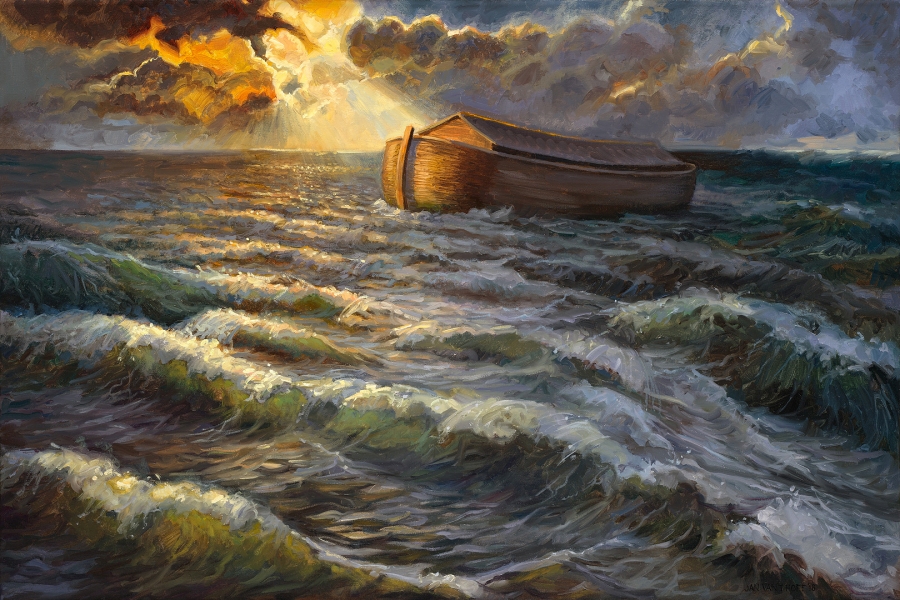
When we think about the flood story, we usually think about an angry God having a divine dummy-spit and destroying everything he had made – except for a few people and livestock. But is that really how the Bible tells the story? To get a better understanding, let’s first take note of a very odd turn that occurs between chapters 5 and 6 of Genesis. If we start at the end of chapter 5 after the family tree details, we find a bloke called Lamech looking for comfort: “When Lamech had lived 182 years, he had a son. He named him Noah, saying, “This one will bring us comfort from our labour and from the painful toil of our hands because of the ground that the LORD has cursed.” But by the end of this passage, God is getting ready to destroy the whole world. “I will wipe mankind, whom I have created, from the face of the earth–men and animals, and creatures that move along the ground, and birds of the air–for I am grieved that I have made them.” Some comfort, indeed. First let’s note that there’s a little play on words in the Hebrew text here. When […]

Abram the Warrior

…But in this story today we see a different type of Abram.
We see a warrior king who defeats all the mighty powers of the world and frees the captives. We see a fierce and angry Abram, who won’t let his brother perish, but chases after him and fights against his brother’s captors and overwhelms them. And he doesn’t stop there, but he chases those armies all the way out of Canaan and sends them back to their own lands in disgrace.
In Abram, we see one who is mightier than all the armies of the world.
And what we have said about Abram, we can also say about Jesus, God’s true Messiah.

Eretz and the Kingdom of God

I have always been fascinated by the word “eretz” [אֶרֶץ]
We first find the word in Genesis 1:1 “When God began to create the heavens and the eretz”.
Traditionally we have always translated the word as “earth”, and we have a mental picture of the world hanging in space, like an apple on a string, being watched over by a distant God.

So eretz can refer to the whole planet under the dominion of God, and it can also refer to individual dominions governed by kings, princes and officials appointed by them.

Loading